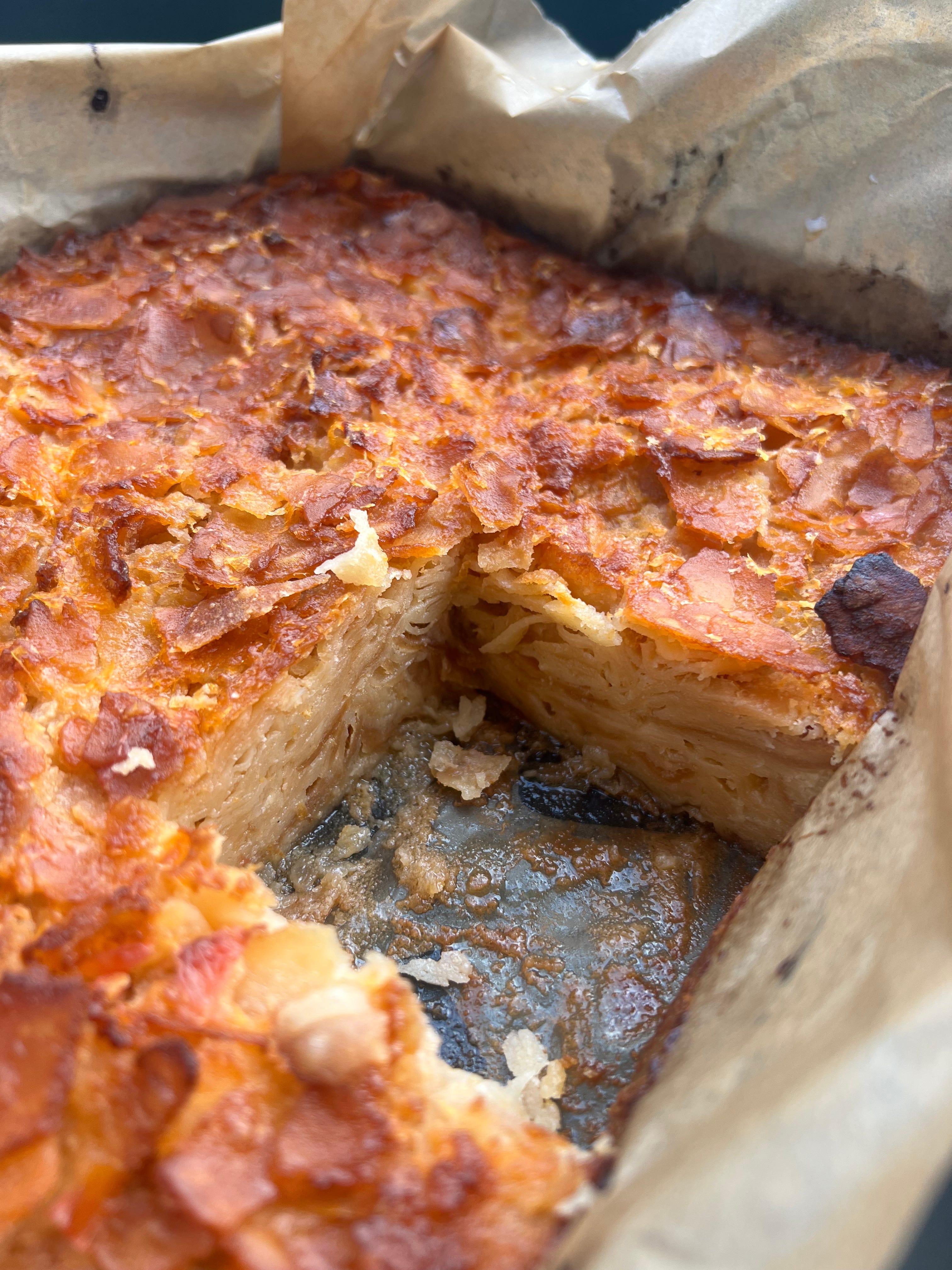
Citrusopita
Zesty filo pie

Greetings, we’re on number 34 and nearly through the ghastliness that is February.
Things that have been joyful recently, are moments of sunshine to break up the rainy grey days. The week I got back from Australia I went out and bought myself a small mimosa tree for my balcony, I can see it from my kitchen and it has definitely been brightening up my days plus I can use it on cakes, far more cost effective than buying bunches. I had my annual citrus workshop on Sunday with some delightful students attending, we played with lots of fun zesty bits. The kumquat maxima from Todoli are really outstanding I can’t stop eating them, just as they are!


The pros of it being too cold and drizzly to want to go outside is I finished a recent knitting project. I have named it the chardigan, it’s a pattern I designed for a cardigan with chard on! This was my second intarsia (knitting technique using different colours) design project and definitely went a lot better than my first, a cassata jumper design which I learnt a lot from.


We got the first forced rhubarb in from Cook’s which is always a highlight, you can expect some rhubarb recipes coming your way soon.
This week we’re being Greek, mostly inspired by my wonderful Aussie pal Will. He spent last Summer cheffing in Greece and came to London afterwards on his way home and told me of all his Greek food adventures. So inspired me to add portokalopita to my substack list.
The literal translation is orange cake, it was created as a way of using leftover dried bits of filo, as filo is a big part of the cuisine so there’s often leftover bits hanging about. The dried bits are crumbled into a custard mix, then baked and drizzled with a syrup when hot out the oven. It then benefits from sitting and being stored in the fridge for consumption in the days after. It originated in Crete, like quite a few Greek desserts it does tend to be on the sweet side.
When I was in Australia, Will and I spent a weekend in the Southern highlands just outside of Sydney at his parents house. They have a beautiful range of citrus trees, including a Meyer lemon which particularly excited me. It’s quite difficult to get hold of good Meyer lemons in the UK and if you do they are pretty pricey but worth it as they have quite a different flavour and are less tart than your regular lemon. Will used them to make portokalopita and I made Meyer lemon ice cream to go with it, delicious!


For my version I wanted to cut the sweetness a bit by using a tarter grapefruit rather than orange, which would make it a Gkréipfroutopita?? I also of course made my own filo, which definitely does make it a lot more time consuming but it’s what I enjoy! You can of course use shop bought which does make the whole cake a lot quicker to pull together. I dried all my sheets on a laundry rack, and then also toasted them for extra dryness. This is not an essential part of the process; a lot of recipes will just use dried sheets. Being Greek the custard mix of course uses yoghurt and olive oil! Greek yoghurt or Greek style yoghurt is essentially strained yoghurt so it has lost some of its whey resulting in a thicker creamier yoghurt that when used in cooking can be less likely to curdle. You will find it used in a lot of Eastern Mediterranean countries, not just Greece!