Páscha
Koulourakia

The Easter hangover is here, although a whole lot less painful than the Christmas one because it’s Spring!
I had a delightful sunny weekend, my parents’ garden is a pretty idyllic setting with an abundance of daffs, tulips, primroses and blossoms plus nearby fields of lambs. Our Easter tree game is so strong, plus we added a few new wax dyed ones and I was particularly happy with my berries. But the fun thing is Easter doesn’t have to be over, because next up is Greek Easter.


Easter is the most important religious holiday in the Greek Calendar, they take it very seriously (rightly so.) One day I dream of being able to go and experience the full Grecian ritual. Family coming together and celebrating is essential, I don’t think it’s ever a small celebration. Of course there is a big focus on the food and eating, as traditionally there has been fasting during Lent.
Easter of course has to have eggs, for Greeks these eggs are usually red (representing blood of Christ.) Every year one of our Greek customers at Leila’s comes and buys 80 eggs!! The eggs are hard boiled dyed on the Thursday before Easter then on the Sunday they get eaten. But first you have to try and crack your neighbour’s egg at the dinner table before they crack yours. The feasting usually starts after the Church service on Holy Saturday that finishes at midnight. Along with the red eggs on the Traditional Easter table you will see tsoureki, this is a sweet brioche-like plaited bread, and obviously there is lamb!
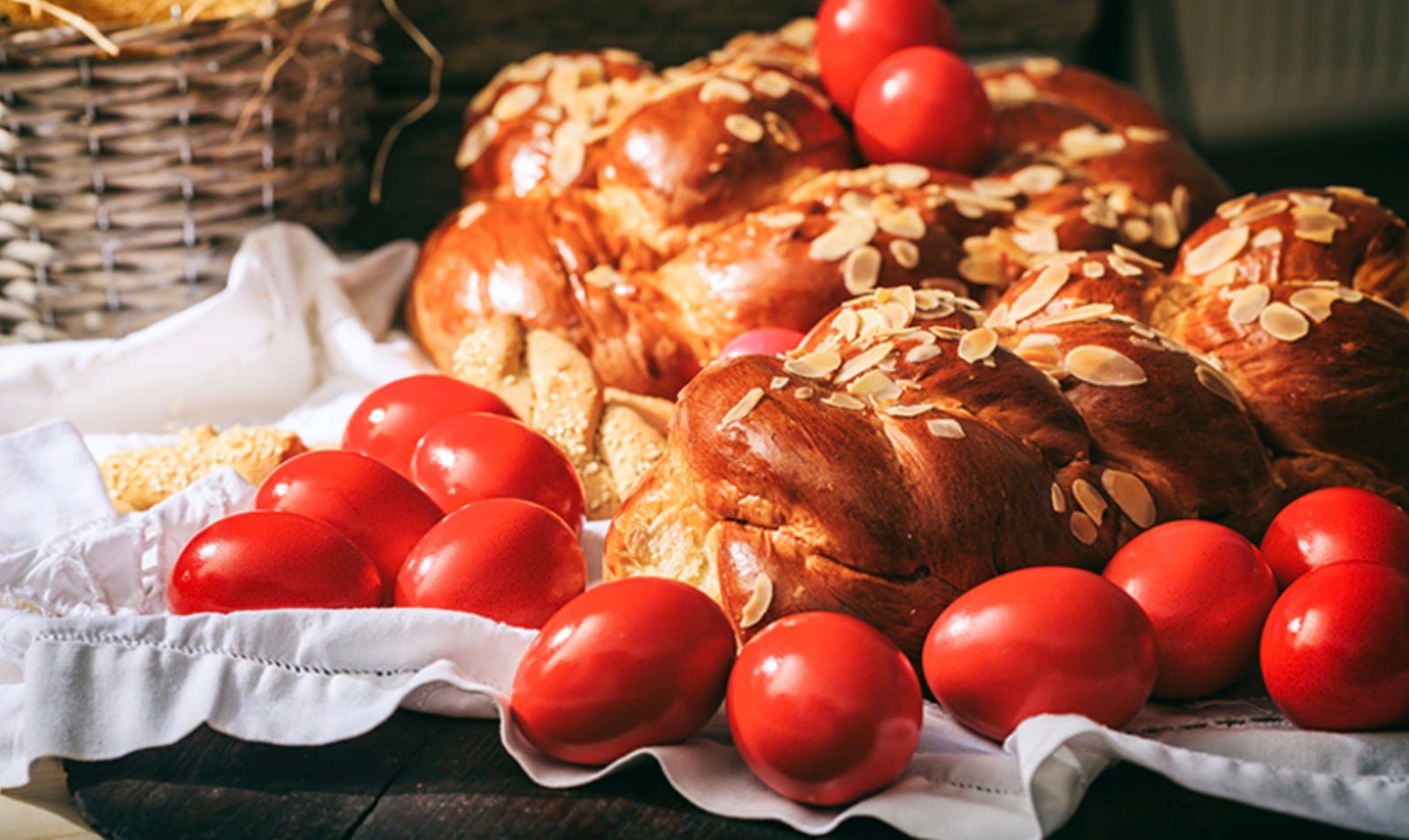
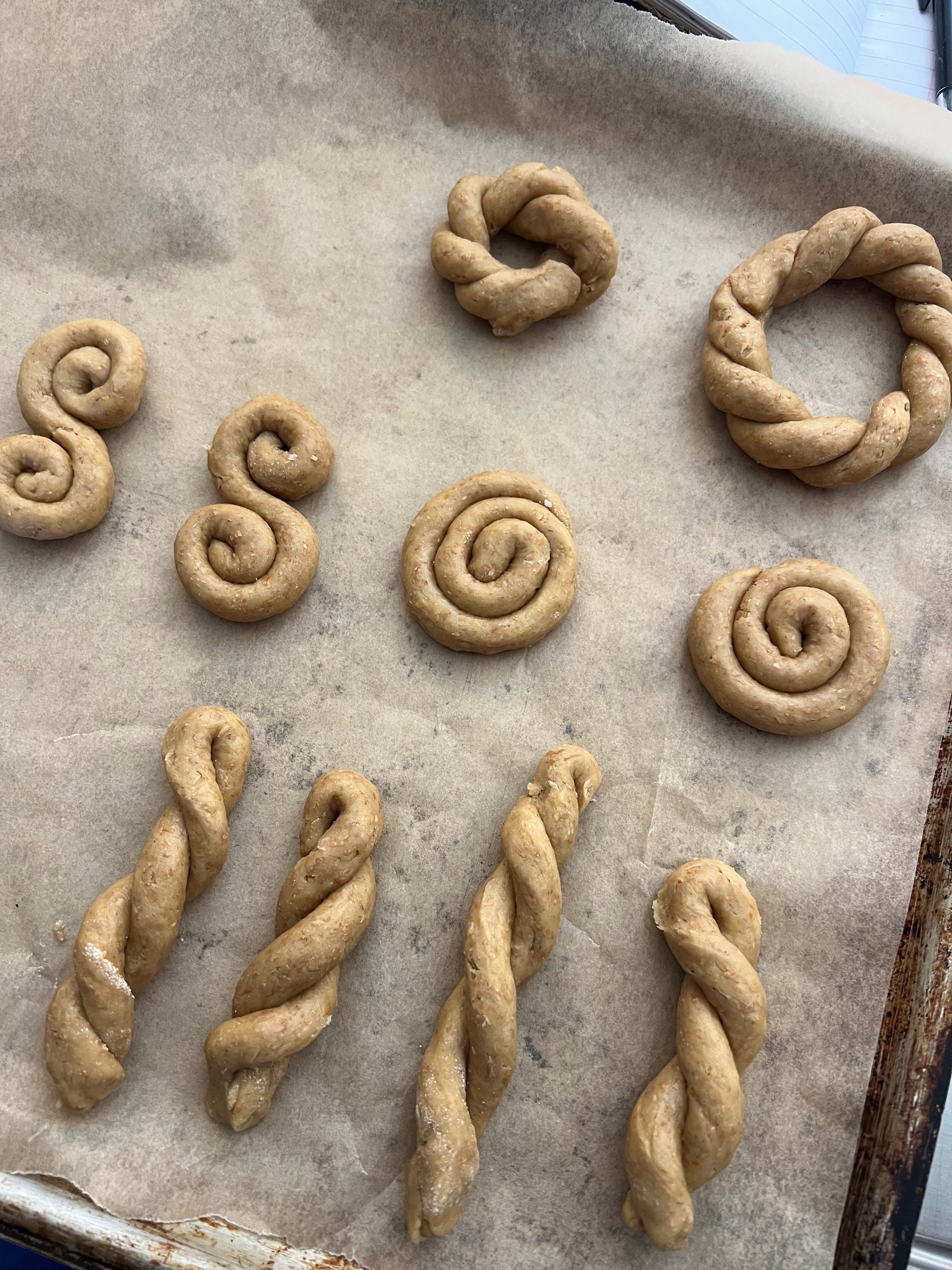
The bake I’ve chosen for us this week is the Koulourakia, these are orange flavoured biscuits that are found in all homes for snacking. These biccies date back to the Minoan civilisation we’re talking 1000BC, proper Ancient Greek stuff. We are definitely on the last of the oranges so a good way to say goodbye to them and enter the hunger gap which is a slight fruit drought. Some recipes use sesame which I opted for as I’m a big fan. These are actually a butter based biscuit, which is unusual as the Greeks normal go to is olive oil but as no butter has been allowed through Lent it feels more of a treat. I’ve seen a variety of shapes but mostly some sort of spiral or twist.
Quite a key ingredient it seems is baking ammonia, this is a leavening agent used before baking powder or bicarbonate of soda popped up. It’s quite challenging to get hold of ammonium carbonate nowadays, although not impossible but as it wasn’t in my cupboard I opted for a mix of baking powder and bicarb which I think is more accessible for most. Although it is said that ammonia gives a drier, crispy texture desired in some biscuits and crisp breads. It’s also used as a smelling salt and so when used in baking there is a distinct smell that can fill your kitchen and it may not be a mmm tasty biscuits baking smell. I think the smell is why it is not seen very often and how it is mostly useful for dry bakes but not recommended for any bake you want to retain moisture in which I feel like may be the majority of baked items!
